
Written by ArgisLiving
Sustainable construction is transforming the property sector in Europe. The need to reduce emissions, optimise resources and develop more efficient buildings is driving the adoption of new construction systems capable of improving both environmental impact and people’s quality of life.
In this context, industrialised timber construction has established itself as one of the most innovative solutions in sustainable architecture and low-carbon buildings.
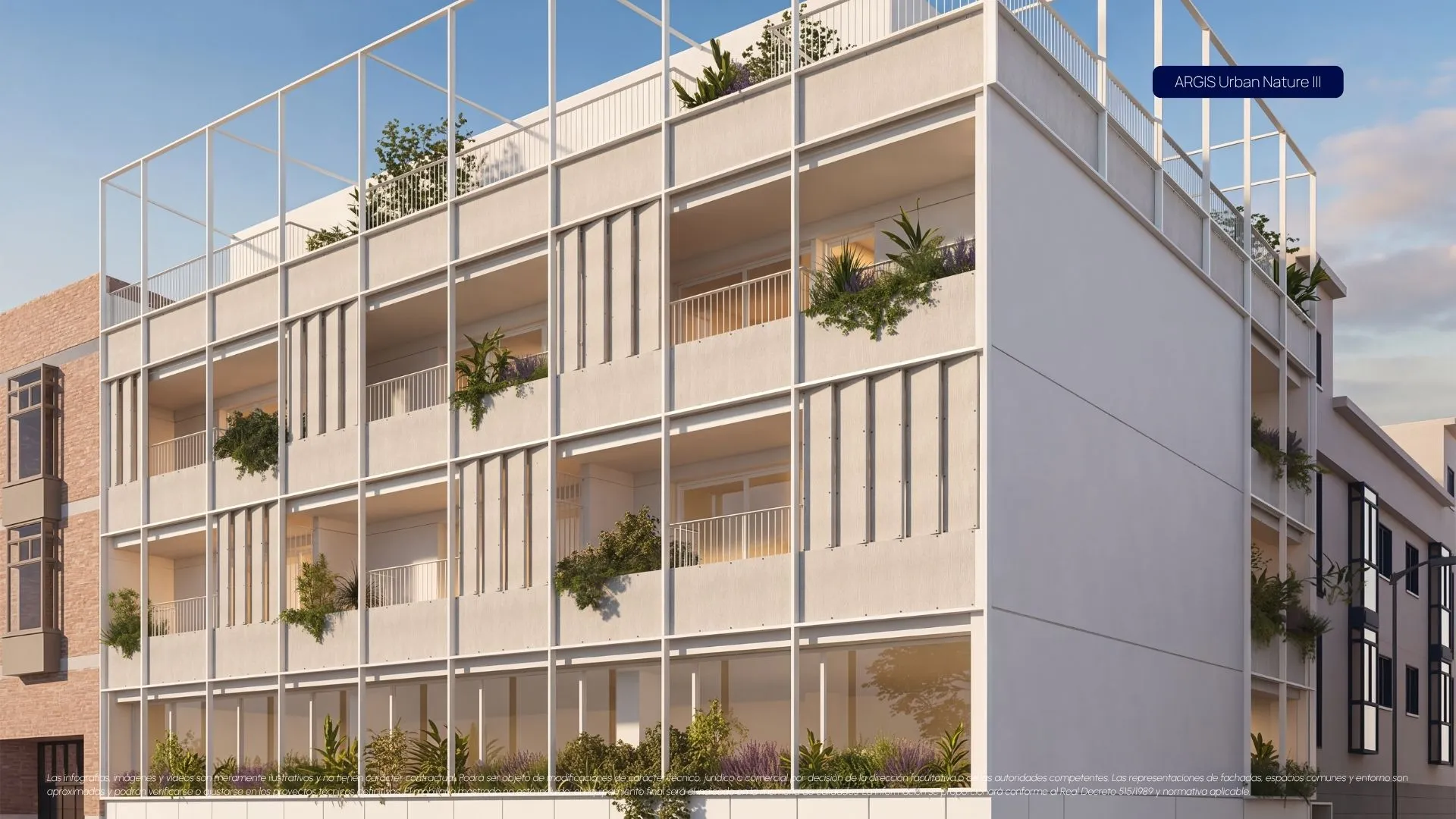
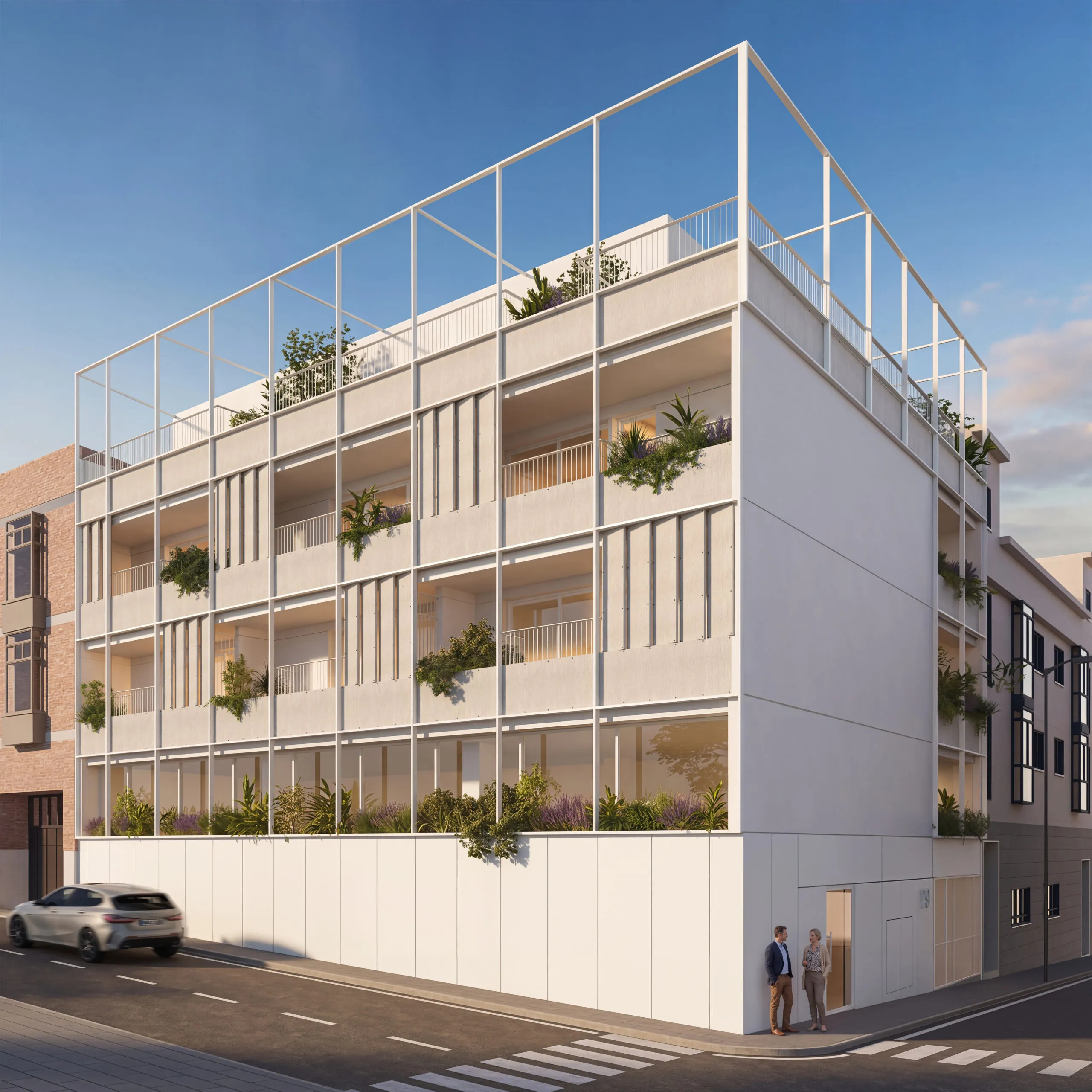
The ARGIS Urban Nature projects, located in Tetuán (Madrid), incorporate industrialised CLT (Cross-Laminated Timber) structures as part of a new generation of sustainable, efficient homes that comply with the latest European ESG and environmental standards.
Sustainable construction and industrialised architecture in Madrid
Madrid is establishing itself as one of the fastest-growing markets for sustainable construction and industrialised architecture in Spain.
The growing demand for energy-efficient homes, coupled with the evolution of ESG criteria and the need to reduce the environmental impact of the property sector, is driving the adoption of new, more sustainable and efficient construction systems.
Against this backdrop, ARGIS Urban Nature is committed to introducing industrialised timber structures in Tetuán, one of Madrid’s districts undergoing the most significant urban transformation and offering the greatest residential potential.
The combination of sustainability, industrialisation and contemporary residential design enables the development of projects tailored to new urban, energy and environmental needs.
👉 Dicover ARGIS Urban Nature I, ARGIS Urban Nature II & ARGIS Urban Nature III
What is CLT, or cross-laminated timber?
CLT (Cross-Laminated Timber) is a solid timber structural system consisting of layers of timber arranged perpendicular to one another and bonded together through structural pressing.
The result is high-strength structural panels capable of replacing traditional concrete or steel systems in certain parts of a building.
Today, CLT has become one of the leading international trends in sustainable construction and low-carbon architecture.
Why is industrialised timber construction on the rise in Europe?
The growth of industrialised timber construction is driven by several key factors:
- The need to reduce CO₂ emissions in the property sector
- Development of more sustainable and efficient buildings
- Industrialisation of construction processes
- Optimisation of time and resources on site
- Reduction of construction waste
- Improvement in energy efficiency
- Greater traceability and sustainability of materials
An increasing number of residential projects, office buildings and urban developments are incorporating industrialised timber structures thanks to their environmental, technical and energy-related benefits.
Why is industrialised timber construction on the rise in Europe?
In ARGIS Urban Nature’s projects, the structural system combines reinforced concrete from ground level up to the mezzanine floor, with a CLT industrialised structure incorporated into the residential units from the first floor upwards.
All thicknesses and configurations have been determined through specialised structural analysis to ensure the safety, stability and durability of the building.
During the development and finalisation of the design, the construction company ACCIONA Construcción has worked alongside international specialists and manufacturers certified with the ETA (European Technical Assessment) mark, a certification that guarantees the product’s compliance with the technical and safety standards required in the European Union.
Key benefits of industrialised timber structures in sustainable housing
Reducing the carbon footprint
The timber used in CLT structures captures and stores CO₂ throughout the building’s lifespan, helping to significantly reduce the environmental impact compared to traditional construction methods.
The use of industrialised timber construction enables progress towards buildings with a lower carbon footprint and more sustainable property developments.
More efficient industrialised construction
The industrialisation of CLT structures allows for optimised construction times, reduced on-site waste and improved construction accuracy.
Furthermore, industrialised manufacturing improves quality control and reduces deviations during project execution.
Greater energy efficiency
Wood has low thermal conductivity and high insulating properties, helping to improve the building’s energy performance and reduce heat loss.
This results in more energy-efficient homes with greater indoor comfort all year round.
Improved acoustic comfort and indoor well-being
ARGIS Urban Nature projects incorporate advanced acoustic systems using MASS – SPRING – MASS solutions and acoustic strips installed between wall and floor junctions.
These solutions help minimise the transmission of airborne and impact noise between homes.
Furthermore, wood has natural hygroscopic properties, allowing it to absorb and release moisture in a balanced manner and promoting greater indoor environmental stability.
Excellent structural performance
CLT offers high structural performance in bending, compression and tension parallel to the grain, enabling the construction of safe, strong and durable buildings.
For this reason, cross-laminated timber structures are increasingly being used in residential projects and new-generation buildings across Europe.
Fire safety
Contrary to some traditional perceptions of timber, CLT can achieve excellent fire performance through encapsulation and controlled charring systems.
The solutions applied ensure full compliance with European safety regulations equivalent to those for other structural systems.
Sustainable construction using FSC- and PEFC-certified timber
The CLT used in ARGIS Urban Nature comes from sustainably managed forests and is certified to FSC and PEFC standards, which are international standards that guarantee the traceability and sustainability of the materials used.
The use of certified timber forms part of a comprehensive strategy aimed at developing more responsible property projects that are aligned with the new ESG standards.
Industrialisation and sustainability: the future of the property sector
Industrialised construction has become one of the leading trends in the European property sector.
The need to develop buildings that are more efficient, sustainable and quicker to construct is driving the adoption of industrialised systems such as CLT, which are capable of reducing environmental impact and improving construction quality.
As well as optimising time and resources, industrialisation allows for greater technical precision, reduced waste generation and a significant improvement in the overall efficiency of the construction process.
In cities such as Madrid, where sustainability and urban regeneration are becoming increasingly important, these types of solutions will play a key role in the future of residential development.
ARGIS Urban Nature: sustainability, innovation and a new way of building in Madrid
At ARGIS, we see sustainability as a comprehensive transformation of the way we design, build and live in residential spaces.
Our commitment to CLT structures, industrialised construction and low-carbon solutions forms part of our vision to develop homes that are more efficient, sustainable and aligned with new urban and environmental needs.
With ARGIS Urban Nature, we continue to drive a new generation of residential projects in Madrid where innovation, sustainability, industrialisation and quality of life form part of a single vision.
👉 Discover ARGIS Urban Nature I, ARGIS Urban Nature II & ARGIS Urban Nature III
On the market
Argis Urban Nature III
Frequently asked questions about industrialised timber and CLT construction
What is CLT in construction?
CLT (Cross-Laminated Timber) is a structural system made of cross-laminated timber, consisting of layers of solid timber arranged perpendicular to one another to create high-strength structural panels.
It is currently one of the most widely used solutions in sustainable and industrialised construction..
What are the advantages of industrialised timber construction?
The main advantages include:
- Reduced carbon footprint
- Greater sustainability
- More efficient construction
- Less waste generated
- Speed of execution
- Excellent thermal and acoustic performance
- Greater indoor comfort
- High construction precision
Are CLT timber structures safe?
Yes. CLT timber structures offer excellent structural performance and comply with all European technical and regulatory standards.
Furthermore, the manufacturers used in ARGIS Urban Nature hold ETA (European Technical Assessment) certification.
How does CLT behave in a fire?
CLT can achieve high fire performance thanks to encapsulation and controlled charring systems, fully complying with European safety standards.
Does CLT improve energy efficiency?
Yes. Wood has low thermal conductivity and high insulating properties, helping to improve energy efficiency and indoor comfort in homes.
Do timber-framed houses have good sound insulation?
Yes. ARGIS Urban Nature projects incorporate advanced acoustic solutions using acoustic strips and MASS–SPRING–MASS systems, which significantly reduce noise transmission.
Does CLT come from sustainably managed forests?
Yes. The CLT used is FSC- and PEFC-certified, which guarantees sustainable forest management and the traceability of the materials.
Related articles
17 August 2026
Projects
ARGIS Days: up to €10,000* off a select range of homes at ARGIS Plaça Llum.
Until 15 September, ARGIS Living is celebrating ARGIS Days, a special limited-time promotion offering discounts...
3 August 2026
Projects